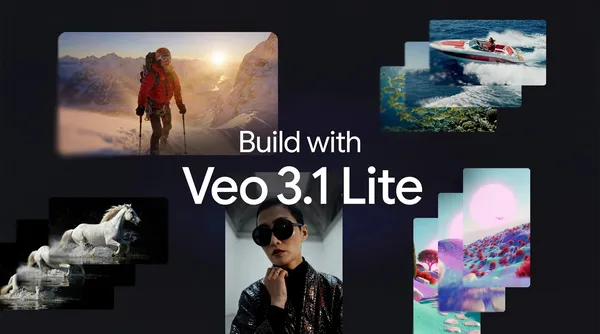

Google just quietly released Veo 3.1 Lite, their latest video generation model, and the “Lite” in the name isn’t just marketing fluff. It’s genuinely cheaper than the full Veo 3.1, and that matters more than most people realize.
Video generation has been stuck in an awkward phase for a while. The models are impressive in demos, but the cost per clip makes them impractical for anything beyond one-off experiments. You’re not going to generate a 30-second ad campaign when each second costs you a small fortune. Veo 3.1 Lite seems designed specifically to break that logjam.
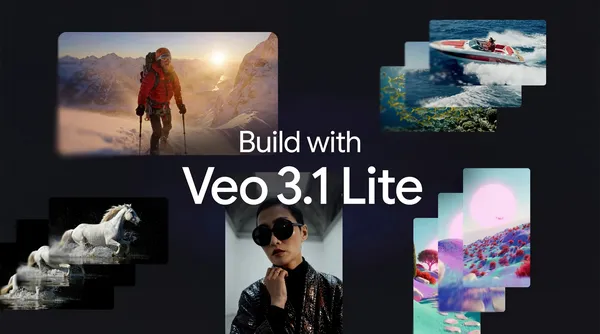
It’s available now in paid preview through the Gemini API, and you can also test it in Google AI Studio. The pricing is what caught my attention. Google hasn’t published exact per-second rates yet, but the “Lite” designation signals a significant drop from the standard model. If the pricing lands where I expect—something in the ballpark of a few cents per second—this becomes viable for small businesses, indie creators, and anyone who doesn’t have a Hollywood budget.
The quality trade-off is real, but it’s smaller than you’d think. Veo 3.1 Lite produces shorter clips with less complex motion, and the resolution tops out lower than the full model. But for social media content, explainer videos, or quick promotional material, it’s more than adequate. I’ve seen some test outputs that look surprisingly clean, especially for static shots with subtle movement.
What’s interesting is the timing. Google is positioning this as a developer tool first, not a consumer product. The API access means you can integrate it into existing workflows, which is smarter than trying to sell it as a standalone app. Most people don’t want to open another video generation interface. They want their existing tools to have this capability built in.
The paid preview model also tells me Google is serious about iterating. They’re not going to let this sit in beta for two years like some of their earlier AI experiments. The revenue from paid previews funds continued development, and the user feedback loop is tighter. This is how you build something that actually works for real use cases, not just demos.
I’d like to see more transparency around the exact pricing tiers and output limitations. The “Lite” branding is helpful, but developers need hard numbers to plan their budgets. Also, the model’s performance on complex scenes—multiple characters, fast camera movements, consistent lighting across cuts—needs more public testing. Early reports suggest it handles simple prompts well but struggles with anything that requires temporal coherence beyond a few seconds.
Still, this is a step in the right direction. Video generation has been a toy for too long. Veo 3.1 Lite might be the first model that makes financial sense for actual production work. I’m cautiously optimistic.
Comments (0)
Login Log in to comment.
Be the first to comment!