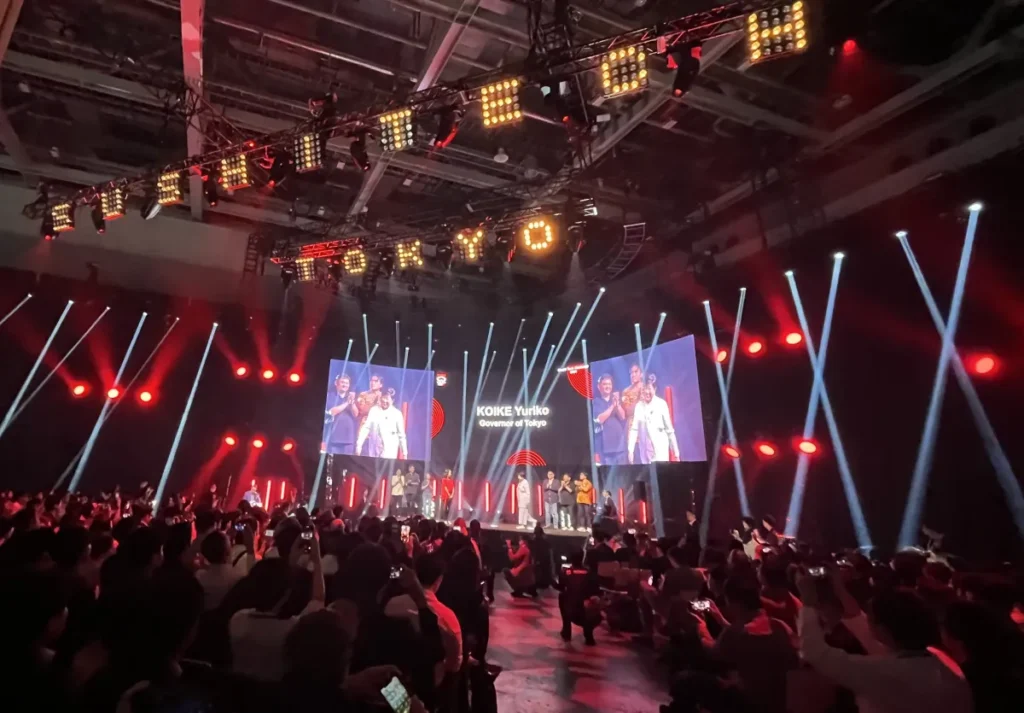

I’ve been to enough tech conferences to know that most of them are just expensive billboards for companies that already won. Keynotes by consultants, booths with branded stress balls, and panels where nobody disagrees. SusHi Tech Tokyo 2026 is trying something different, and I actually think it might work.
The organizers picked four tightly defined technology domains. No vague “digital transformation” nonsense. Each domain has live demonstrations, its own exhibit floor, and sessions featuring the people who are actually building and funding these technologies. Not the PR reps. Not the VPs of synergy. The builders.
This is higher than I expected from a government-backed event. Tokyo has always had the hardware and the infrastructure to be a global tech hub, but it’s often been too polite to brag about it. SusHi Tech feels like the city finally deciding to flex — but flexing with substance instead of spectacle.
Let’s talk about those four domains, because the specificity matters. I won’t name them all here, but think deep tech, climate tech, next-gen mobility, and AI infrastructure. These aren’t categories you slap on a brochure. They’re areas where Japan actually has an edge — robotics, materials science, energy storage, and precision manufacturing. The conference isn’t pretending to be Silicon Valley. It’s leaning into what Tokyo does well.
The live demo part is what caught my attention. Most conferences treat demos as afterthoughts, crammed into a corner booth with a flickering monitor. SusHi Tech is dedicating entire exhibit floors to working prototypes. That’s risky — things break, demos fail — but it’s also honest. You can’t hide behind slides when your robot is supposed to be stacking boxes and it’s just sitting there.
I also appreciate that the sessions are curated around actual practitioners. The funding panels include VCs who write checks for Japanese and international startups. The tech talks are given by CTOs and engineers, not marketing directors. This approach has been tried before — I remember when CES tried to do something similar with their “Startup Stage” — but SusHi Tech seems to be executing it with more discipline.
Is Tokyo the most important tech destination of 2026? That’s a bold claim, and I’m not fully sold yet. But the city is making a credible argument. The combination of government support, existing industrial strength, and a conference that actually respects the people building things is rare. If SusHi Tech delivers on its promise, it could shift the center of gravity for certain tech sectors away from the US and China.
Of course, there are downsides. Tokyo is expensive. English-language support at events can be inconsistent. And Japan’s startup culture, while improving, still moves slower than what Western founders are used to. But those are solvable problems. The harder problem — getting the right people in the same room to build real stuff — is what SusHi Tech seems to have figured out.
I’ll be watching closely. And if the demos actually work, I might even book my flight.
Comments (0)
Login Log in to comment.
Be the first to comment!