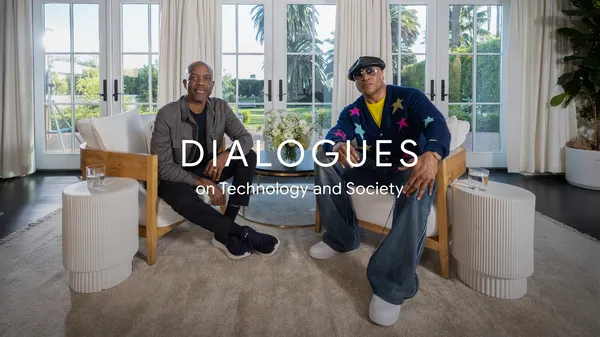

I’ve been watching the Dialogues on Technology and Society series from Google for a while now, and I’ll be honest—some episodes lean a bit too far into corporate cheerleading. But the latest one, where James Manyika sits down with LL COOL J, is actually worth your time.
If you don’t know Manyika, he’s Google’s SVP of Technology and Society, and he’s been around the block—worked on AI ethics, wrote papers, actually thinks about the societal implications instead of just slapping a “responsible AI” label on everything. LL COOL J, meanwhile, is a legend who’s been making music since the 80s, acting, writing books, and generally proving that creativity isn’t a finite resource.
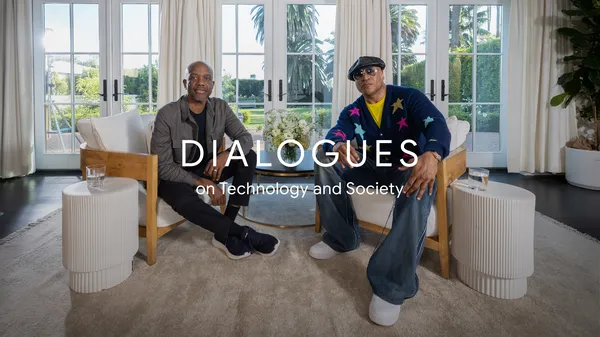
The thumbnail alone tells you this isn’t your typical tech keynote. It’s two guys who’ve earned their stripes, sitting down to talk about something that’s been bugging a lot of artists: what does AI actually mean for creativity?
They cover a lot of ground. LL COOL J talks about how he’s seen technology change music production from analog to digital to AI-assisted. He’s not one of those “back in my day” types—he’s genuinely curious about what tools can do. But he’s also clear-eyed about the risks. Copyright issues, the feeling that a machine can mimic your style, the question of whether AI-generated art can ever have soul.
Manyika pushes back a bit, which I respect. He argues that AI can be a collaborator, not just a replacement. Think about it: we already use autotune, drum machines, synthesizers. Nobody calls those cheating anymore. The line keeps moving. What’s different now is that the tool can generate something from nothing—or at least from a prompt. That’s a genuine shift, and pretending it’s not is naive.
One thing that stood out to me was LL COOL J’s point about cultural preservation. He talked about how AI could help archive and analyze hip-hop’s history—lyrics, beats, production techniques—before the people who lived it are gone. That’s a use case I hadn’t really considered, and it’s a good one. Not everything has to be about generating new content; sometimes the technology can help us remember what we already had.
Of course, they didn’t solve every problem. The conversation stays at a high level, and I wish they’d dug deeper into specific policy questions or real-world examples of AI messing up artists’ livelihoods. But as a starting point for a broader discussion, it works.
If you’re an artist, a technologist, or just someone who’s tired of the AI hype cycle, give this one a watch. It’s not going to change your mind overnight, but it might help you see the other side a little clearer.
Comments (0)
Login Log in to comment.
Be the first to comment!