
Google hasn’t exactly been subtle about shoving Gemini into every corner of Workspace, but the latest update feels like a genuine attempt to make the AI more useful rather than just present.
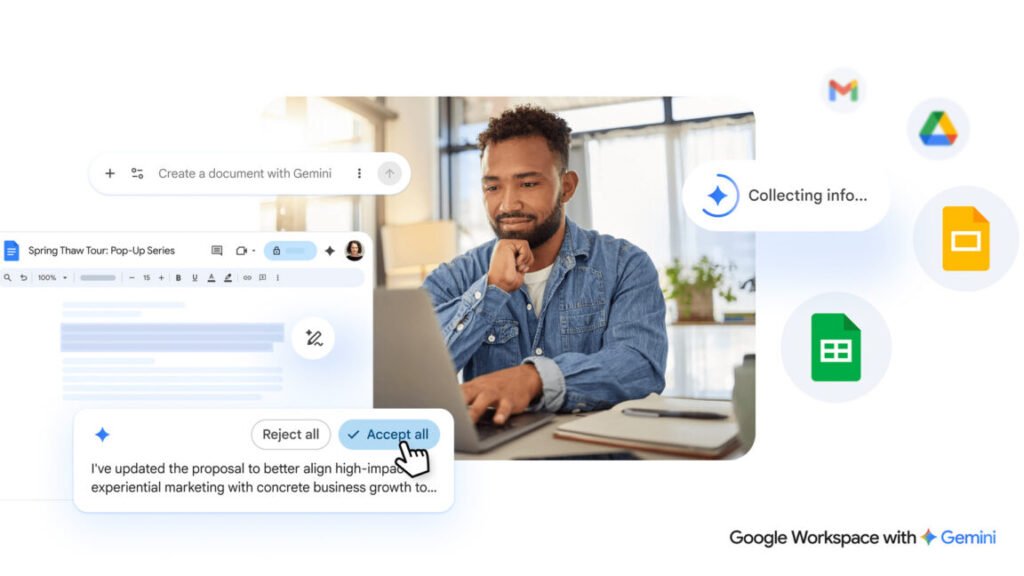
If you open a new Google Doc right now, you’ll already see some AI options at the top. The new system moves that interaction to the bottom of the page, where a chatbot-style text box greets you on a blank document. You type what you want, Gemini spits out a draft, and you’re off to the races. No more staring at a blinking cursor wondering how to start.
What’s more interesting is how Gemini can now pull in content from across your Google account. Want to base a document on an email thread from Gmail, a conversation from Google Chat, or another file in Drive? Just ask. It’ll grab the relevant bits and weave them into the draft. This is genuinely useful for anyone who has to write proposals, reports, or meeting notes that reference existing material.
The editing side also got an upgrade. You can highlight a specific paragraph and ask Gemini to rewrite it, change the tone, or adjust the formatting. There’s also style matching, which sounds like a lifesaver for teams where everyone writes like a different person. You feed it a sample of the desired style, and Gemini tries to match subsequent edits to that voice.
Google is careful to note that all Gemini suggestions stay private until you explicitly approve them. That’s a necessary reassurance, but I wonder how long that promise holds once the AI starts accessing your Gmail and chat history for context. The privacy model here is only as good as Google’s current policy, and we’ve seen those shift before.
Slides and Sheets aren’t left out either. Gemini can now generate slide decks from a simple prompt, styling them with themes and layouts that supposedly match your brand. In Sheets, it can help with data analysis and formula suggestions, though the real heavy lifting there still requires knowing what you’re doing.
I’ve been using the early version of these features for a few days, and the quality is decent. The drafts aren’t going to win any literary awards, but they’re a solid starting point. The real value is in the context-aware stuff—pulling in a relevant email to frame a response, or generating a slide deck from a document you already wrote. That saves actual time, not just the illusion of it.
Of course, this also means Google is training its models on more of your data, even if anonymized. The convenience is real, but so is the trade-off. If you’re already deep in the Google ecosystem, this update makes Workspace harder to ignore. If you’re privacy-conscious, it’s another reason to look elsewhere.
Either way, the blank page tyranny is getting a run for its money. Whether that’s a relief or a surrender depends on how much you trust the AI with your work.
Comments (0)
Login Log in to comment.
Be the first to comment!