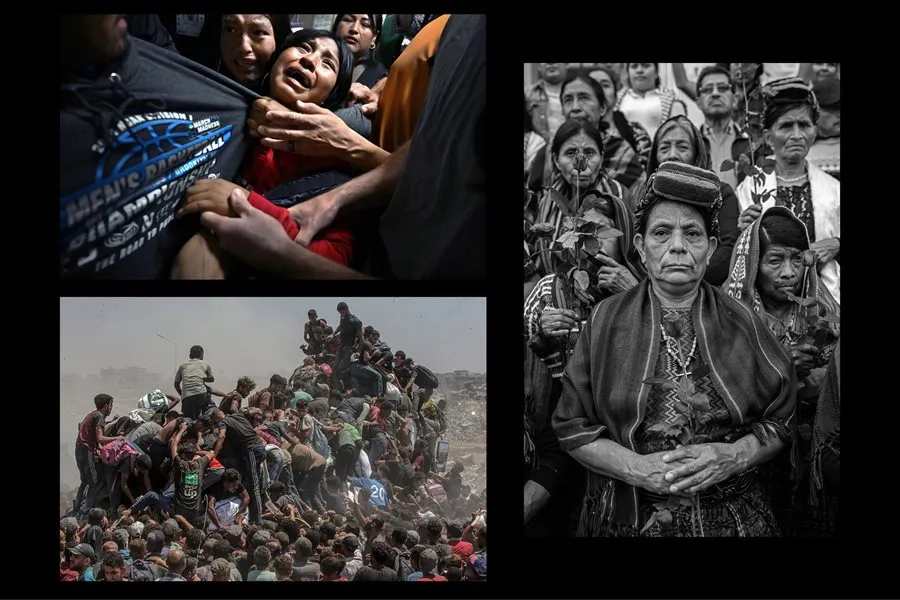

The World Press Photo competition just announced its 2026 winner, and it feels like a deliberate statement on the whole AI photography mess.
The top prize went to photojournalist Carol Guzy for an image called “Separated by ICE.” It shows children clinging to their father after an immigration hearing. Harrowing stuff, classic documentary work. No generative AI involved, which is exactly the point.
World Press Photo has been around for decades, and its whole identity is built on capturing reality. Photojournalism doesn’t work if you can’t trust what you’re seeing. So the organization put out specific rules this year about what AI tools are allowed. Basically, the answer is: not much. You can use standard editing tools, but anything generative is out.
This is higher than I expected from a contest that usually focuses on composition and storytelling rather than technical purity. But given how fast generative image tools have spread, they had to draw a line somewhere. And they drew it hard.
The irony is that the debate over what counts as a “real photo” has been around since Photoshop. But generative AI is a different beast. It doesn’t just adjust an existing image, it creates new content from scratch. That breaks the fundamental trust in photojournalism.
I’ve seen plenty of arguments that photographers should be allowed to use AI for minor fixes or creative enhancements. World Press Photo’s stance says no, not for this category. And I think they’re right. If you want to make art with AI, go ahead. But don’t call it photojournalism.
The finalists and winner are worth looking at. The image itself is powerful, and the fact that it was shot the old-fashioned way adds to its weight. No prompts, no text-to-image, just a person with a camera being in the right place at the right time.
This approach has been tried before, but World Press Photo is one of the few contests with enough clout to actually enforce it. Whether other competitions follow suit remains to be seen. But for now, this is the clearest answer we’ve gotten to the question of what a photo is in 2026.
Read the full story at The Verge.
Comments (0)
Login Log in to comment.
Be the first to comment!